Cybersecurity analytics tools act as digital guardians by continuously monitoring network activity and system behaviors. These tools leverage advanced data analysis, AI, and machine learning to detect suspicious patterns and potential threats in real-time. Through behavioral analytics and SIEM systems, they establish baseline patterns of normal activity and quickly flag anomalies that could indicate attacks. When threats are detected, automated alerts trigger rapid incident response procedures and notify security teams. Understanding these tools’ capabilities reveals essential layers of modern cyber defense.
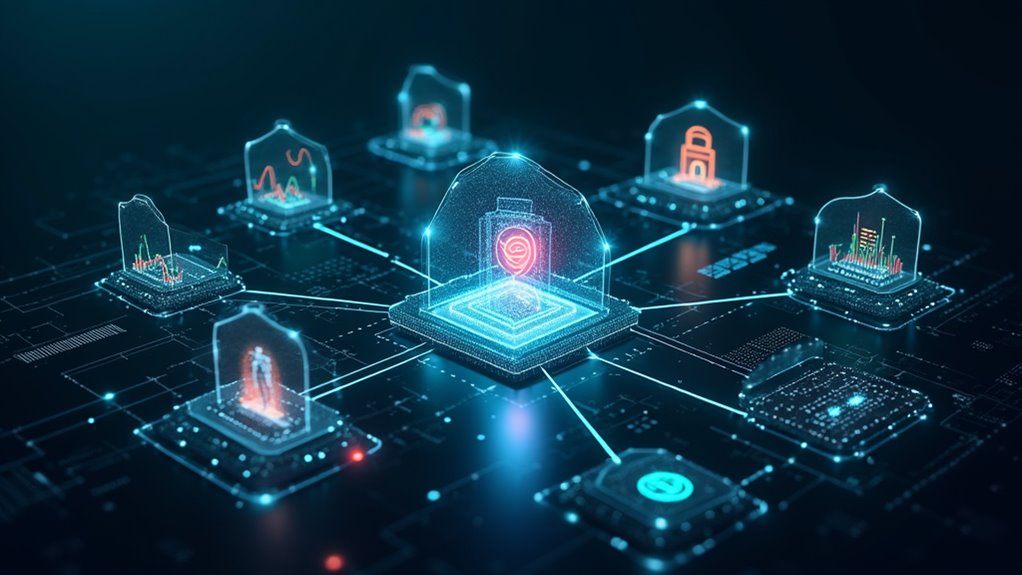
In today’s hyperconnected digital landscape, cybersecurity analytics tools serve as the vigilant sentinels protecting organizations from an ever-evolving array of cyber threats. These sophisticated tools leverage advanced data analysis, machine learning, and artificial intelligence to detect and respond to potential attacks before they can wreak havoc on business operations. By collecting and interpreting vast amounts of data from multiple sources, these tools provide organizations with the vital ability to stay one step ahead of cybercriminals and enhance their overall cyber threat intelligence capabilities. Additionally, the utilization of cyber security monitoring software allows for continuous surveillance that helps identify threats in real-time.
At the heart of modern cybersecurity analytics are SIEM (Security Information and Event Management) systems, which aggregate and analyze activity from various IT resources in real-time. These platforms serve as the central nervous system of an organization’s security infrastructure, processing countless data points to identify suspicious patterns and potential breaches. Tools like Splunk Enterprise Security and ManageEngine Endpoint Central further enhance this capabilities by employing machine learning algorithms to detect anomalous behavior and protect vulnerable endpoints. Top SIEM tools offer critical functionalities that can further streamline threat detection processes. Moreover, endpoint protection software solutions complement these analytics tools by providing an additional layer of defense against malware and unauthorized access.
SIEM systems act as vigilant digital watchdogs, continuously monitoring networks to detect and defend against emerging cybersecurity threats in real-time.
The implementation of behavioral analysis and predictive analytics has revolutionized how organizations approach threat detection. By establishing baseline patterns of normal user activity, these tools can quickly identify deviations that might indicate a security breach. For instance, if an employee suddenly begins accessing sensitive files at unusual hours or from unexpected locations, the system flags these actions for immediate investigation. This proactive approach allows security teams to intervene before data theft or system compromise occurs.

Data visualization plays a vital role in making complex security information digestible and actionable. Security analysts can quickly interpret vast amounts of data through intuitive dashboards and reports, enabling faster decision-making during critical incidents. Furthermore, these tools assist in compliance reporting by automatically generating the necessary documentation for regulatory requirements, saving valuable time and resources while ensuring accurate record-keeping.
The integration of external threat intelligence with internal security measures creates a more robust defense system. Cloud-based options provide organizations with the flexibility to scale their security operations as needed while maintaining consistent protection across distributed networks and remote workforces. These tools continuously update their threat databases, ensuring protection against the latest known vulnerabilities and attack vectors. Advanced threat intelligence analytics helps organizations predict and mitigate potential security risks more effectively.
Perhaps most importantly, cybersecurity analytics tools enable rapid incident response through automated alerts and predefined action plans. When a potential threat is detected, these systems can automatically initiate containment procedures while simultaneously notifying relevant security personnel. This immediate response capability greatly reduces the potential impact of security incidents, helping organizations maintain business continuity even in the face of sophisticated cyber attacks.
Through the combination of advanced analytics, machine learning, and automated response capabilities, these tools have become indispensable assets in the modern cybersecurity arsenal.
Frequently Asked Questions
What Is the Average Cost of Implementing Cybersecurity Analytics Tools?
The average cost of implementing cybersecurity analytics tools varies considerably based on organization size and needs.
Sophisticated risk assessment tools typically range from $10,000 to $30,000 annually, while more thorough AI-driven platforms can require investments around $75,000.

When factoring in professional development ($50,000/year) and ongoing maintenance costs, most organizations should expect to budget between $100,000 to $150,000 for a robust analytics implementation.
How Long Does It Take to Train Staff in Using Analytics Tools?
Staff training duration for cybersecurity analytics tools varies based on program intensity and prior experience.
Entry-level certification programs typically take 4-8 months, while intensive practical training can be completed in 12-24 weeks.
Micro-courses for specific tools may only require 3 hours, and certification exam prep takes around 165 minutes.

Remote learning options and flexible formats help accommodate different learning paces and work schedules.
Can Small Businesses Benefit From Cybersecurity Analytics Tools?
Small businesses can greatly benefit from cybersecurity analytics tools through cost-effective cloud solutions and pay-as-you-go models.
These tools provide real-time threat detection, protect sensitive customer data, and support strategic decision-making without requiring extensive IT infrastructure.
They enable proactive security monitoring, quick incident response, and help maintain data integrity.

The accessibility of modern analytics platforms means even businesses with limited resources can implement robust cybersecurity measures to safeguard their operations.
Which Industries Are Most Vulnerable to Cyber Attacks?
Manufacturing has emerged as the most targeted industry in 2023, facing 25% of all cyberattacks.
Finance and insurance sectors follow at 18.2%, primarily due to valuable client data and financial assets.
Small and medium businesses are particularly vulnerable, attracting 43% of attacks despite limited resources.

Healthcare, energy, and retail round out the high-risk industries, with healthcare specifically targeted for personal health information and ransomware opportunities.
What Percentage of Cyber Attacks Are Successfully Detected by Analytics Tools?
Detection rates for cyber attacks vary considerably, with analytics tools typically catching between 60-90% of threats.
However, studies suggest that around 70% of malware can still evade detection.
Advanced AI-powered analytics systems claim higher success rates approaching 90%, but the rapid evolution of attack methods poses ongoing challenges.

Approximately 30% or more of attacks may go undetected, highlighting the need for continual improvement in detection capabilities.