Personal cybersecurity starts with ironclad habits. Use strong passwords—12-16 characters, mixing letters, numbers, and symbols—and never reuse them. Watch for phishing scams; dodgy emails with bad grammar or weird links are red flags. Secure devices with auto-lock and updates, and use WPA3 encryption for home Wi-Fi. Avoid public Wi-Fi without a VPN. Stay sharp—cyber threats lurk everywhere. Stick around to uncover more ways to shield your digital life.
Building Strong Password Practices
Many people underestimate the power of a strong password, but it’s the first line of defense against cyber crooks looking to break into your digital life. A weak password is like leaving your front door ajar—hackers thrive on it.
Go for length, at least 12-16 characters, mixing uppercase, lowercase, numbers, and symbols. Random strings or unrelated word passphrases (4-7 words) work best. Never reuse passwords; each account needs its own unique shield. Implementing strong cybersecurity measures can significantly reduce the risk of data breaches and protect sensitive information. Additionally, being aware of common online scams can help you identify potential threats before they become an issue.
Common slip-ups? Reusing passwords (60% of Americans do this) or crafting weak ones like “password123.” Storing them unsafely or sharing them is a disaster waiting to happen. Implementing multi-factor authentication adds an extra layer of protection to your accounts. Additionally, Regular software updates are also essential to protect your accounts from vulnerabilities.
Password managers are a game-changer—they generate and store complex passwords securely, so you only remember one master key. Only 36% use them, though. Cybersecurity experts recommend strong password practices for anyone looking to improve their digital safety.
Why risk it? Start building tough passwords today. Your digital safety ain’t worth gambling on. Act now, stay sharp.
Safeguarding Against Phishing Threats
Cybersecurity isn’t just about locking down passwords; it’s also about staying one step ahead of sneaky tricks like phishing. This nasty cyberattack uses fake emails, texts, or calls to steal sensitive info like credentials or bank details, often by posing as trusted entities. Attackers exploit human trust—think urgent messages or sketchy links. Over 3.4 billion spam emails flood inboxes daily, so vigilance is key. In 2025, organizations are expected to implement national strategies to combat these threats more effectively, which may include enhanced cybersecurity frameworks to improve defense mechanisms. As the demand for cybersecurity professionals grows, career opportunities in this field will significantly increase.
Phishing is closely tied to the dark web, where stolen data is traded and exploited by cybercriminals.
Spotting phishing ain’t hard if you know the signs: generic greetings, bad grammar, or mismatched URLs when you hover over links. Urgent threats or requests for passwords? Red flag!
If hit, act fast—report to security teams or services like FTC.gov/Complaint, change passwords, and alert banks. Run malware scans too. Phishing is often a gateway to other cyber threats that can compromise your entire digital security.
Phishing can drain accounts or steal identities, but awareness stops it cold. Stay sharp, question odd messages, and don’t click without thinking. Protect yourself now, no excuses!
Securing Devices and Networks
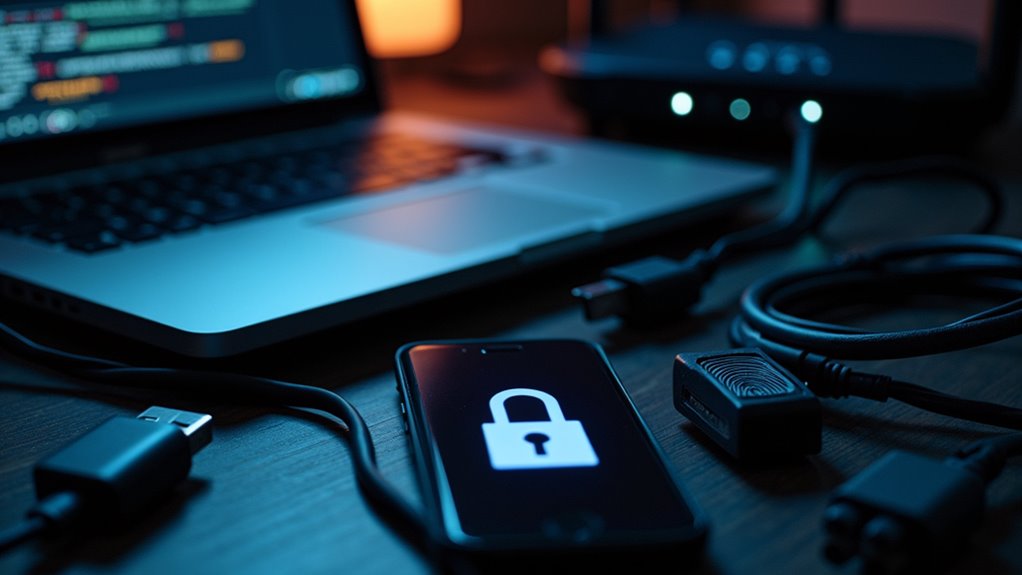
Countless devices and networks form the backbone of our digital lives, yet they’re often the weakest link in personal cybersecurity. Hackers exploit unpatched software and weak passwords daily, so locking down your gear is non-negotiable.
Start with strong passwords—12+ characters, mixed up with symbols and numbers—and pair ‘em with biometrics like fingerprint scans. Set devices to auto-lock after 5 minutes max, and enable remote wiping if they’re lost.
Next, keep software and firmware updated. Auto-updates are your friend; unpatched systems are hacker bait.
For home Wi-Fi, ditch default router settings, use WPA3 encryption, and slap on a 20-character password. Avoid public Wi-Fi unless you’ve got a VPN shield.
With IoT gadgets, change default creds pronto and segment networks to isolate risks.
Act now—secure your digital turf before it’s too late. One slip, and you’re exposed. Protect yourself today!
Frequently Asked Questions
How Can I Protect My Privacy on Social Media?
Protecting privacy on social media is essential in today’s digital jungle. Users should regularly tweak privacy settings to limit who sees their posts and personal info like birthdates.
Avoid oversharing sensitive details or real-time locations. Accept only known connections, and review friend lists often.
Enable two-factor authentication (2FA)—a second security step—for accounts. Stay alert, act now, and keep prying eyes out with these bold moves!
What Are Safe Ways to Back up Data?
Secure Your Data Now!
Safe ways to back up data are critical in today’s digital world. They can use external hard drives for offline control or cloud storage like Google Drive for easy access.
Network Attached Storage (NAS) offers centralized backups for multiple devices. Encrypt data with AES-256 for safety, and follow the 3-2-1 rule: three copies, two media types, one offsite.
Test backups regularly. Protect yerself today!
Should I Limit App Permissions on My Phone?
Lock Down Those Apps!
Should app permissions on a phone be limited? Absolutely.
Apps often grab more access than needed, risking data exposure or malware attacks. Limiting permissions—think location, camera, or contacts—slashes these threats and boosts privacy.
It’s like locking extra doors; only let apps in when necessary. Head to device settings, audit permissions, and revoke extras.
Take control now. Why hand over keys to your digital life?
How Do I Securely Delete Sensitive Information?
Wipe It Clean: Securely Deleting Sensitive Info!
They must act fast to protect sensitive data. Standard deletion ain’t enough—data lingers!
Use file-shredding software like Eraser or CCleaner to overwrite files with random junk, makin’ recovery impossible. For drives, tools like Windows’ cipher /w wipe free space.
SSDs? Use manufacturer secure erase commands. Physical destruction—shred or drill—works for end-of-life media.
Encrypt first, always verify deletion. Stay safe, don’t just hit delete!
Is It Safe to Use Public USB Chargers?
Public USB Chargers: Safe or a Trap?
Using public USB chargers is risky. Hackers can exploit them for “juice jacking,” stealing data or installing malware through the USB’s dual power-data function.
The FBI warns against these stations at airports or malls. Protect yourself—carry a personal charger or power bank. Use charge-only cables or USB data blockers. Deny data transfer prompts.
Stay vigilant; one wrong plug could compromise everything on your device.