ISO 27001 establishes a systematic framework for protecting organizational information through an Information Security Management System (ISMS). The framework utilizes the Plan-Do-Check-Act cycle to implement security controls across four key domains: organizational, people, physical, and technological. It requires management commitment, risk assessment, and continuous monitoring to maintain data confidentiality, integrity, and availability. Organizations following ISO 27001 demonstrate robust security practices while gaining competitive advantages. The deeper layers of ISMS reveal powerful strategic benefits.
In today’s digital landscape, where data breaches and cyber threats loom large, ISO 27001 stands as the gold standard for information security management. This internationally recognized framework provides organizations with a systematic approach to protecting sensitive information assets through the implementation of an Information Security Management System (ISMS). At its core, ISO 27001 focuses on maintaining the confidentiality, integrity, and availability of information – the classic CIA triad that security professionals know all too well.
The framework’s strength lies in its risk-based approach, which requires organizations to methodically identify, assess, and treat information security risks within their specific context. This isn’t just another checkbox exercise – it’s a living, breathing system that demands continuous monitoring and improvement through the Plan-Do-Check-Act (PDCA) cycle. Management commitment is vital; without strong leadership support, even the most well-designed ISMS will fail to deliver real security value. Cybersecurity education plays a crucial role in equipping teams with the knowledge necessary to effectively implement these practices, as understanding cyber security education requirements helps professionals navigate the essential skills needed for compliance. Additionally, pursuing essential certifications can further enhance the expertise of cybersecurity teams. The successful implementation of an ISMS can significantly impact a cyber security analyst career path, opening up new opportunities for professionals in the field.
Organizations implementing ISO 27001 must start by clearly defining their ISMS scope and establishing a thorough information security policy. This foundational work sets the stage for the meat of the framework – risk assessment and treatment. The Statement of Applicability (SoA) serves as a vital document, detailing which controls from Annex A are being implemented and why. It’s fundamentally the organization’s security control playbook.

The latest version of ISO 27001 (2022) introduces a modernized control structure with 93 controls grouped into four themes: Organisational, People, Physical, and Technological. These controls range from high-level policy requirements to specific technical measures like access control and cryptography. The framework recognizes that effective security isn’t just about technology – it’s about people, processes, and physical security too.
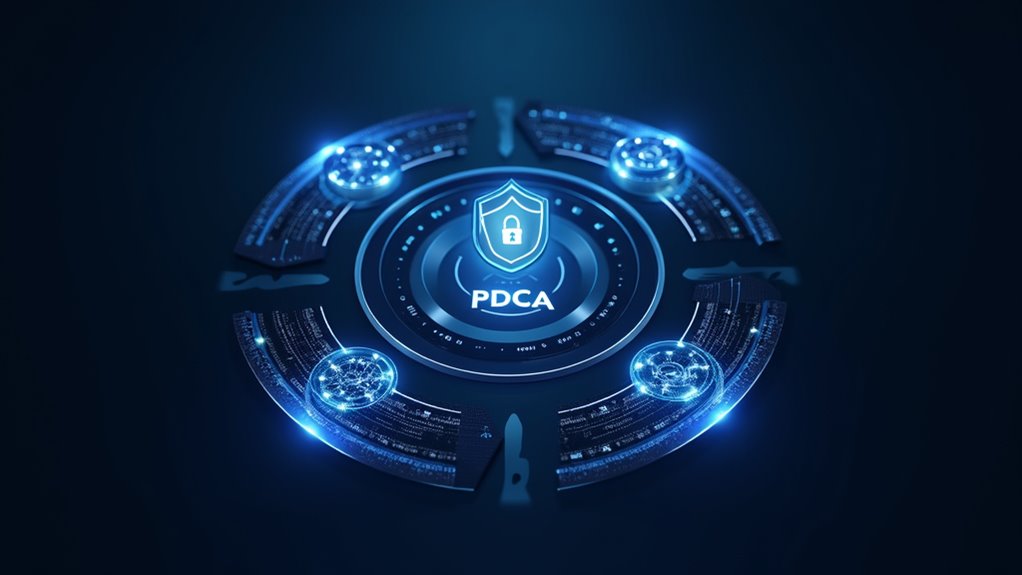
Implementation follows the PDCA cycle, starting with planning and establishing the ISMS foundation. Organizations then move to implementing controls and conducting awareness training, followed by monitoring and measuring effectiveness through internal audits and management reviews. The cycle closes with corrective actions and improvements, but really, it never ends – security is an ongoing journey, not a destination.
The benefits of implementing ISO 27001 extend beyond improved security posture. Organizations gain a competitive edge by demonstrating their commitment to protecting stakeholder data. The framework also helps meet various regulatory requirements, from GDPR to industry-specific regulations. Perhaps most importantly, it provides a structured approach to building cyber resilience in an increasingly hostile digital environment.
For cybersecurity professionals, understanding ISO 27001 is critical. It provides a thorough framework for implementing, maintaining, and continuously improving information security controls. While the standard may seem overwhelming at first, its systematic approach makes complex security challenges manageable and measurable. In an era where cyber threats evolve daily, having a robust ISMS isn’t just good practice – it’s a business imperative.
Frequently Asked Questions
How Long Does It Typically Take to Achieve ISO 27001 Certification?
Achieving ISO 27001 certification typically takes 6-12 months for most organizations.

Small and medium businesses can complete the process in 3-6 months with proper dedication and resources.
Larger enterprises may need 12-18 months or longer, depending on complexity.
The timeline varies based on factors like organizational size, existing security maturity, resource availability, and scope of implementation.
Some companies using automation tools claim faster completion, but thorough preparation remains essential for success.
What Are the Recurring Costs Associated With Maintaining ISO 27001 Compliance?
Maintaining ISO 27001 compliance involves several significant recurring costs.

Annual surveillance audits typically range from $3,000-$15,000.
Internal audits and monitoring can cost between $5,000-$20,000 annually.
Employee training averages $1,000 per person yearly.
Technology tools and platforms require $5,000-$20,000 in annual subscriptions.

Additional expenses include security testing ($7,000-$22,000) and possibly dedicated compliance staff ($90,000/year) or consultants ($1,000-$10,000 annually).
Can Small Businesses Effectively Implement ISO 27001 Standards?
Small businesses can effectively implement ISO 27001, though they face unique challenges.
The standard’s flexible framework allows for scalable implementation based on company size and resources. While limited budgets and expertise pose obstacles, SMBs can succeed through phased implementation, focusing on critical controls first.
Many small businesses find success using consultants or templates to guide the process, ultimately strengthening their security posture and competitive advantage.
Which Industries Benefit Most From ISO 27001 Certification?
Four key industries stand out as prime beneficiaries of ISO 27001 certification.

IT & Telecom sectors gain significant credibility for handling sensitive client data.
Financial services use it to meet strict regulatory requirements and protect against cybercrime.
Healthcare organizations rely on it to safeguard patient information and maintain HIPAA compliance.
Government agencies and critical infrastructure benefit through enhanced protection of classified data and alignment with mandated security standards like KRITIS.
How Often Do Organizations Need to Renew Their ISO 27001 Certification?
Organizations must renew their ISO 27001 certification every three years to maintain valid certified status.

During this three-year cycle, annual surveillance audits are required to verify ongoing compliance.
The recertification process involves a thorough audit similar to the initial certification.
If an organization fails to recertify before expiration, their certification becomes invalid, and they must restart the entire certification process from the beginning.