
Tokenization and encryption serve as distinct data protection methods with fundamentally different approaches. Tokenization replaces sensitive data with random tokens that have no mathematical relationship to the original information, while encryption transforms data into coded text using algorithms and keys. Tokenization offers stronger security since tokens are meaningless without access to a secure token vault, whereas encrypted data remains vulnerable if keys are compromised. Understanding these nuances helps organizations implement the most effective security strategy for their specific needs.
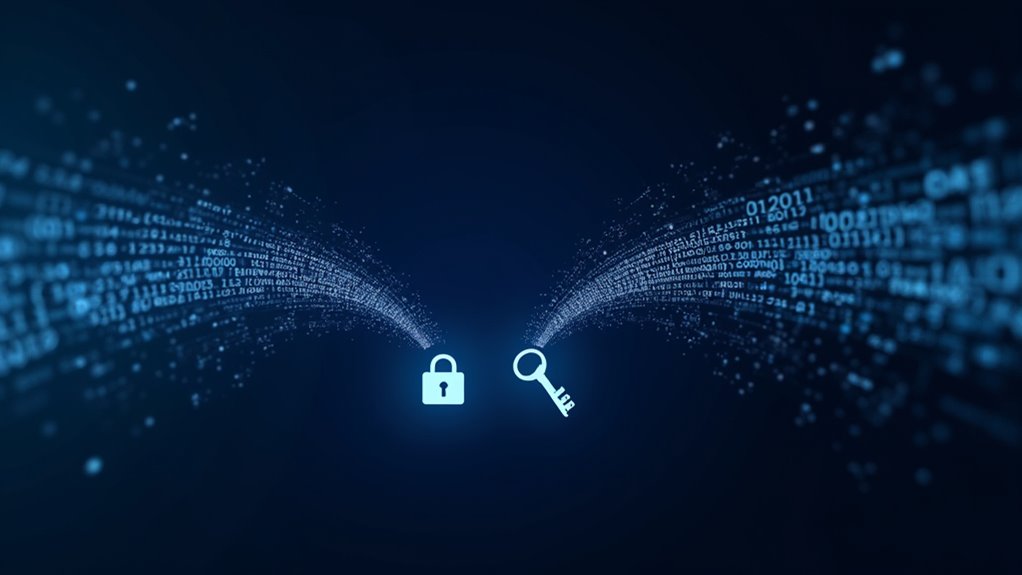
While both serve as guardians of sensitive data in the digital age, tokenization and encryption represent fundamentally different approaches to securing valuable information. Encryption transforms data through complex mathematical algorithms and keys, creating ciphertext that can be decrypted with the correct key. In contrast, tokenization replaces sensitive information with meaningless surrogate values called tokens, which have no mathematical relationship to the original data. Additionally, cybersecurity measures are crucial in enhancing the overall effectiveness of these data protection strategies.
The distinction between these two methods becomes essential when considering their practical applications. Encryption excels in protecting both structured and unstructured data, making it ideal for securing everything from confidential documents to digital communications. Tokenization, however, finds its sweet spot in handling structured data like credit card numbers and bank account details, where the original information needs to be referenced but not revealed during transactions. Additionally, cyber insurance for small businesses can help mitigate risks associated with data breaches.
One of the most significant differences lies in their reversibility. Encrypted data can always be decrypted if someone possesses the correct key, which creates a potential vulnerability if encryption keys are compromised. Tokenization, on the other hand, relies on a secure token vault that maintains the relationship between tokens and original data. Without access to this vault, tokens remain meaningless strings of characters, offering an additional layer of security.
Tokenization’s reliance on secure vaults, rather than mathematical keys, provides stronger protection against unauthorized access to sensitive data.

The compliance implications of these technologies also differ markedly. While encryption helps organizations meet various security standards, it may require additional measures for full compliance. Tokenization often simplifies compliance efforts by completely removing sensitive data from an environment, replacing it with tokens that have no inherent value. This approach is particularly valuable in payment processing, where businesses can handle transactions without actually storing sensitive card data.
Security vulnerabilities present another vital distinction. Encrypted data remains vulnerable to unauthorized access if encryption keys are compromised, while tokenized data stays protected unless both the token vault and its security measures are breached. This fundamental difference makes tokenization particularly attractive for businesses that want to minimize their risk exposure while maintaining the ability to process sensitive information.
In today’s digital landscape, many organizations opt to use both technologies synergistically. Encryption proves invaluable for securing data in transit and protecting various types of information, while tokenization excels at securing specific data elements that need frequent access or reference. Effective cybersecurity training small business can enhance understanding of these security measures among employees.
Understanding these distinctions enables organizations to deploy the right security measure for each specific use case, creating a more robust and effective data protection strategy that addresses both immediate security needs and long-term compliance requirements.
Frequently Asked Questions
What Are the Costs Associated With Implementing a Tokenization System?
Implementing a tokenization system involves substantial initial and ongoing costs. Custom platform development typically ranges from $50,000 to $100,000, while smart contract auditing adds significant expenses.
Ongoing maintenance costs, including regulatory compliance and security updates, can run between $5,000 and $50,000 annually. Platform-specific costs vary based on features, with crypto mining integration around $60,000.

Additional expenses include API integrations and scalability requirements.
Can Tokenization Be Reversed or Detokenized Without the Original Token Vault?
Yes, tokenization can be reversed without a token vault through vaultless tokenization methods.
This approach uses encryption algorithms to generate and reverse tokens without storing original data. The process relies on secure cryptographic devices and encryption keys rather than a centralized database.
While more efficient and potentially safer than vault-based systems, it requires robust key management protocols to maintain security during the detokenization process.
How Does Tokenization Impact System Performance and Processing Speed?

Tokenization affects system performance in several key ways.
While it adds processing overhead through tokenization and detokenization steps, its impact is typically less severe than encryption. Database lookups replace complex cryptographic calculations, though high transaction volumes can strain token vaults.
Format-preserving tokens help maintain compatibility with existing systems. Overall, well-implemented tokenization can actually improve efficiency by reducing compliance checks and simplifying security validations across workflows.
What Industries Benefit Most From Tokenization Besides Financial Services?
Real estate, supply chain management, healthcare, and art industries gain significant advantages from tokenization.
In real estate, it enables fractional property ownership and streamlines transactions.

Supply chains benefit through enhanced transparency and fraud reduction.
Healthcare utilizes tokenization for secure patient data management, while the art market gains from improved provenance tracking and increased accessibility through fractional ownership.
These industries see improved efficiency, reduced costs, and greater market participation.
How Often Should Tokens Be Rotated or Updated for Optimal Security?
Token rotation frequency depends on several key factors.
For standard access tokens, industry best practices recommend rotation every 1-30 days. High-security applications like financial services or healthcare should rotate more frequently – typically every 1-7 days.

Refresh tokens should rotate after each use.
When handling sensitive data, organizations should implement shorter rotation intervals and maintain strict grace periods of 0-60 seconds during changes to guarantee system continuity.