FIDO security keys deliver robust passwordless authentication through advanced cryptography, making them virtually immune to phishing attacks. These physical devices generate unique signatures for each login attempt while keeping private credentials safely stored on the key itself. Available as USB tokens, NFC devices, or smartphone implementations, FIDO keys streamline the authentication process by replacing complex passwords with simple actions like button presses or fingerprint scans. Understanding their capabilities reveals an essential tool for modern digital security.
FIDO Security Keys
In today’s digital battlefield, FIDO security keys stand as formidable guardians against the rising tide of cyber threats, offering a passwordless future that’s both more secure and user-friendly. These small but mighty physical devices leverage public-key cryptography to protect user credentials, effectively eliminating the need for traditional passwords while providing robust protection against phishing attacks and other common security vulnerabilities. Essential Cyber Security Tips for both individuals and businesses can further enhance the effectiveness of these keys. Additionally, users should regularly update their devices to ensure they are protected against the latest threats. Implementing network segmentation can also help limit potential exposure if a breach occurs. Furthermore, many cybersecurity ai companies are integrating FIDO keys into their security solutions to bolster overall defenses.
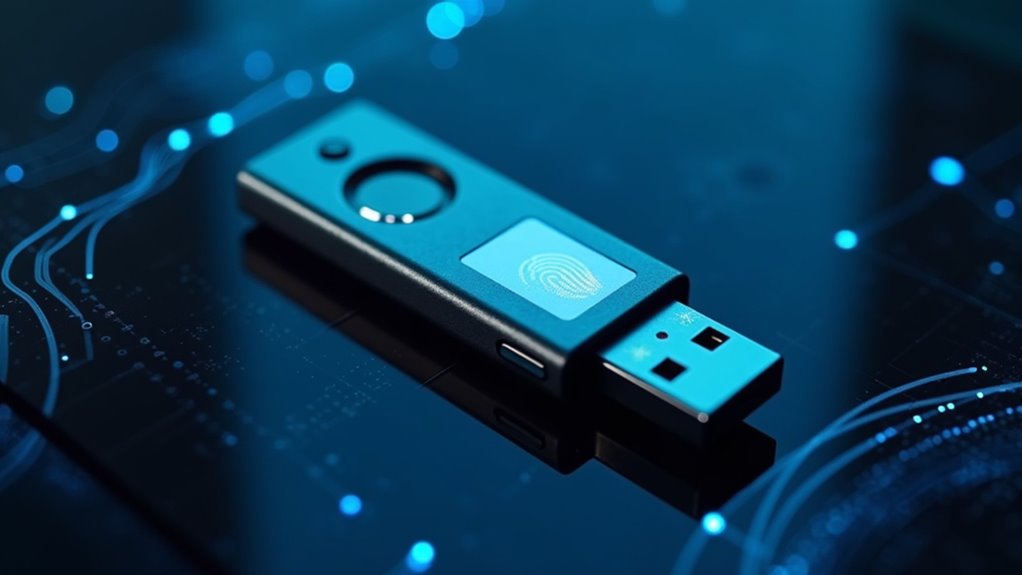
FIDO security keys come in various forms, from USB devices to NFC-enabled tokens and even smartphone implementations. The two main variants are FIDO U2F keys, which focus primarily on secure website logins, and the more versatile FIDO2 keys that support additional authentication methods like fingerprint readers and PINs. This flexibility allows users to choose the authentication method that best suits their needs while maintaining high security standards.

The security benefits of FIDO keys are considerable and far-reaching. Even if a server becomes compromised, user credentials remain safe because sensitive data never leaves the physical device. The implementation of public-key cryptography guarantees that while the public key is shared with the server, the private key stays securely stored within the device. This approach effectively neutralizes the risks associated with password-based authentication systems and greatly reduces the impact of potential data breaches. Additionally, adopting cost-effective cybersecurity strategies can further bolster the defense mechanisms surrounding sensitive customer data.
From a user experience perspective, FIDO keys simplify the authentication process dramatically. Gone are the days of remembering complex passwords or dealing with frequent password resets. Instead, users simply connect their security key and perform a simple action, such as pressing a button or using a fingerprint reader. This streamlined approach not only reduces user frustration but also minimizes the likelihood of authentication errors that often plague traditional password systems.
Organizations across various industries are increasingly adopting FIDO security keys to enhance their security posture. Banks, manufacturing facilities, and mobile workforces like airline crews and emergency responders particularly benefit from these portable authenticators. The deployment strategy varies based on specific security requirements and operational needs, with some organizations opting for company-provided authenticators while others support a bring-your-own-device approach.
The underlying technology of FIDO keys revolves around sophisticated public-key cryptography, which generates and verifies unique signatures for each authentication attempt. This system guarantees that even if an attacker manages to compromise a service provider’s servers, they cannot gain access to user accounts because the critical private keys never leave the security device.

The result is a robust security solution that effectively addresses the vulnerabilities inherent in traditional password-based systems while providing a seamless user experience that meets the demands of modern digital interactions.
Frequently Asked Questions
Can FIDO Security Keys Be Shared Among Multiple Family Members?
While FIDO security keys can technically support multiple accounts, sharing them among family members isn’t recommended for security reasons.
Each family member should have their own key to maintain individual privacy and prevent unauthorized access.
The keys are designed for personal use, where one person manages multiple accounts.

Sharing could compromise security features like biometric authentication and lead to potential security breaches or access conflicts.
What Happens if My FIDO Security Key Gets Wet or Damaged?
Water damage or physical trauma can seriously affect a FIDO security key’s functionality.
If a key gets wet, it should be dried immediately and tested for proper operation. Many keys have some water resistance, but prolonged exposure can damage internal components.
Physical damage often requires complete replacement since these devices aren’t designed for self-repair.

It’s recommended to keep backup keys and store them in protective cases to prevent damage and maintain continuous security access.
How Often Do FIDO Security Keys Need to Be Replaced?
FIDO security keys typically need replacement every 2-5 years, depending on usage and organizational policies.
Physical damage, technological obsolescence, and protocol updates (like the U2F to FIDO2 shift in 2025) may necessitate earlier replacement.
Enterprise environments often require more frequent updates based on security audits and compliance requirements.

Users should also consider replacement if their key shows signs of wear, malfunction, or compatibility issues with newer devices.
Are FIDO Keys Compatible With Smart Home Security Systems?
FIDO security keys currently have limited direct compatibility with smart home security systems.
While they can’t typically connect directly to smart home devices, they can secure the accounts that control these systems. Users can protect their smart home access by using FIDO keys with companion mobile apps and cloud service logins.
Some ecosystems, like Apple HomeKit, benefit from FIDO key authentication when signing into associated accounts that manage smart home controls.
Can Hackers Clone or Duplicate My FIDO Security Key?
While it’s technically possible to clone FIDO security keys, doing so requires significant expertise, specialized equipment, and physical possession of the key.

The recently discovered EUCLEAK vulnerability affects some devices, but successful cloning remains extremely difficult and resource-intensive.
Typical hackers lack the capabilities to execute such attacks, which are primarily limited to sophisticated state-sponsored actors targeting high-value individuals.
For average users, the risk of key cloning is minimal if proper physical security is maintained.