VPNs are clearly superior to proxy servers for secure browsing, offering thorough encryption across all device traffic rather than just browser-level protection. While proxies simply route traffic through intermediary servers, VPNs create encrypted tunnels that shield all data from prying eyes. VPNs also maintain strict no-logs policies and include additional security features like kill switches, making them far more reliable for privacy protection. Their user-friendly setup and optimized infrastructure guarantee both security and performance. Understanding these key differences reveals deeper layers of cybersecurity implications.
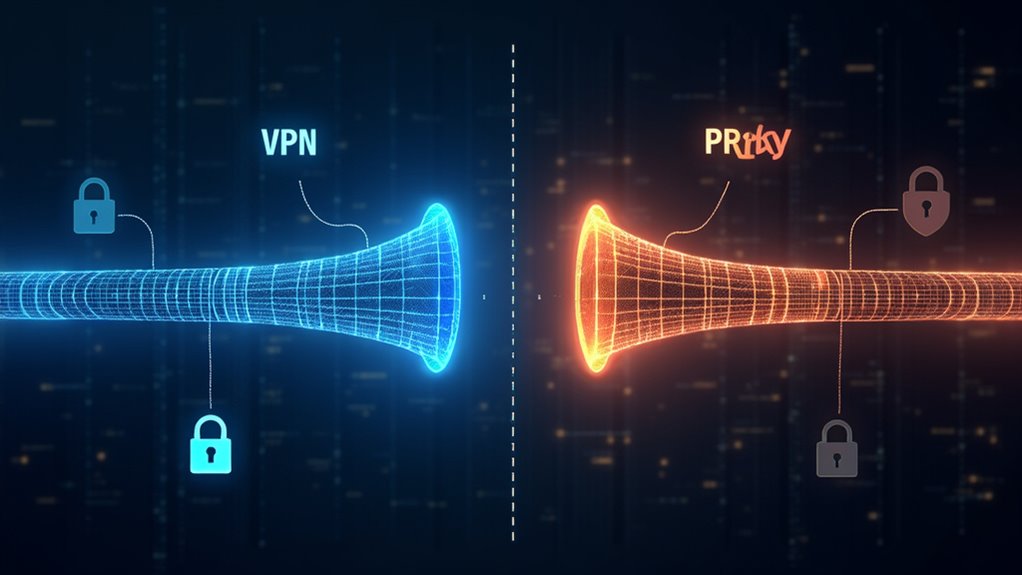
When it comes to protecting online privacy and security, the choice between a VPN and proxy service represents a vital decision for internet users. While both tools mask IP addresses and help users maintain anonymity online, they differ markedly in their security capabilities, performance, and overall protection levels.
VPNs stand out as the more all-encompassing solution, encrypting all internet traffic at the operating system level. This means every bit of data leaving a device – whether it’s banking information, passwords, or casual browsing – remains unreadable to unauthorized parties. Additionally, following essential cyber security tips can further enhance your online safety. Implementing strong email security practices can also play a crucial role in safeguarding your sensitive information. Furthermore, utilizing multi-factor authentication is an effective strategy to bolster account security. Moreover, practicing good password hygiene can significantly reduce the risk of unauthorized access to your accounts.
VPNs encrypt all data leaving your device, ensuring sensitive information stays protected from prying eyes during transmission.
VPNs also typically include advanced security features like kill switches, which automatically disconnect internet access if the VPN connection drops, preventing accidental data exposure.

In contrast, proxy servers operate with notable limitations. They simply route traffic through an intermediary server, masking the user’s IP address but failing to encrypt the actual data being transmitted. This leaves sensitive information vulnerable to interception during transmission.
Additionally, many proxy servers, especially free ones, actively log and potentially sell user data, compromising the very privacy they claim to protect.
The performance differences between these services are equally striking. While VPNs may cause slight speed reductions due to encryption overhead, reputable VPN providers maintain optimized infrastructure that minimizes this impact.
Premium VPN services consistently deliver faster and more stable connections compared to typical proxy servers, which often suffer from limited resources and unreliable performance, particularly in their free iterations.

Another important distinction lies in coverage scope. VPNs protect all internet traffic on a device, regardless of the application or browser being used.
This all-encompassing protection contrasts sharply with proxy servers, which only shield traffic from specifically configured applications or browsers, leaving other data streams exposed. This limitation becomes particularly problematic for users seeking complete privacy protection.
The setup process also differs markedly between these services. VPN providers typically offer user-friendly applications with straightforward installation and connection procedures.
Proxy configuration, however, often requires manual server detail input and technical knowledge, making it less accessible for average users. While smart DNS proxies attempt to simplify this process, they still fall short of the plug-and-play convenience offered by most VPN services.

For users serious about secure browsing, VPNs clearly emerge as the superior choice. Their combination of robust encryption, all-encompassing device coverage, and strict no-logs policies provides a level of security and privacy that proxy servers simply cannot match. Implementing strong security measures is essential to protect your online data.
While proxies might suffice for basic IP masking or accessing geo-restricted content, they fail to deliver the thorough protection necessary in today’s increasingly hostile online environment.
Frequently Asked Questions
Can I Use a VPN and Proxy Simultaneously for Enhanced Security?
Yes, using a VPN and proxy simultaneously is possible and can enhance security through multiple layers of protection.
The VPN encrypts all traffic while the proxy adds an extra layer of IP masking. Together, they create a more robust defense against surveillance and tracking.

However, users should expect slower connection speeds and need careful configuration to prevent conflicts.
This setup works best for those prioritizing maximum privacy over performance.
Do VPNS or Proxies Affect Internet Gaming Ping and Performance?
Both VPNs and proxies impact gaming performance, but in different ways.
VPNs typically add 10-20ms to ping due to encryption overhead, while proxies generally have less latency impact since they don’t encrypt data.

However, both services route traffic through external servers, which can increase overall ping times.
Free or overcrowded servers tend to cause more significant performance drops.
Premium VPNs usually offer more stable connections compared to basic proxies.
Which Option Is Better for Accessing Geo-Restricted Streaming Services?
VPNs are clearly the superior choice for accessing geo-restricted streaming services.
They consistently bypass sophisticated blocking measures used by major platforms like Netflix and Hulu, while proxies often struggle with detection.

VPNs regularly update their server IPs and use advanced obfuscation techniques to maintain reliable access.
Though proxies might work for basic services like YouTube, they’re less dependable for premium streaming platforms that employ robust anti-proxy measures.
Are Free VPNS and Proxies Safe for Everyday Browsing?
Free VPNs and proxies carry significant security risks for everyday browsing.
While some offer basic protection, many harvest user data, contain malware, or compromise privacy. Free VPNs often have limited features and slow speeds, making them frustrating for daily use.
Though they might include encryption and kill switches, the risks typically outweigh benefits.
For safe browsing, it’s advisable to invest in reputable paid VPN services that prioritize user security and privacy.
How Do VPNS and Proxies Impact Mobile Device Battery Life?
VPNs typically consume more battery power than proxies due to continuous encryption processes.
While VPNs can drain 1-15% battery per hour depending on usage, proxies generally use less than 5% under similar conditions.
The impact varies based on factors like protocol choice, server distance, and network type.
WireGuard VPN protocol offers better battery efficiency compared to OpenVPN.
To minimize drain, users can select nearby servers, disable auto-connect, and utilize battery saver modes.